Smutstone gameplay: a card battler you can master
Under the visual novel surface sits a real collectible card game. Here is how cards, colors, rarities and auto-battles fit together.
Smutstone looks simple at first, and the early campaign is genuinely easy. Then the difficulty curve wakes up: battles become a puzzle of deck composition, card levels and color choice.
Auto-battles decided before they start
Fights in Smutstone are automatic. You pick the cards, the game plays them, and the stronger deck wins. That sounds simple, but it puts all the pressure on preparation. Attack and health values decide most fights, so a card you leveled three times will beat a fresh card of the same rarity almost every time. Special abilities such as Resurrect, Freeze, Fireball, Heal and Curse can flip a fight that stats alone would lose.
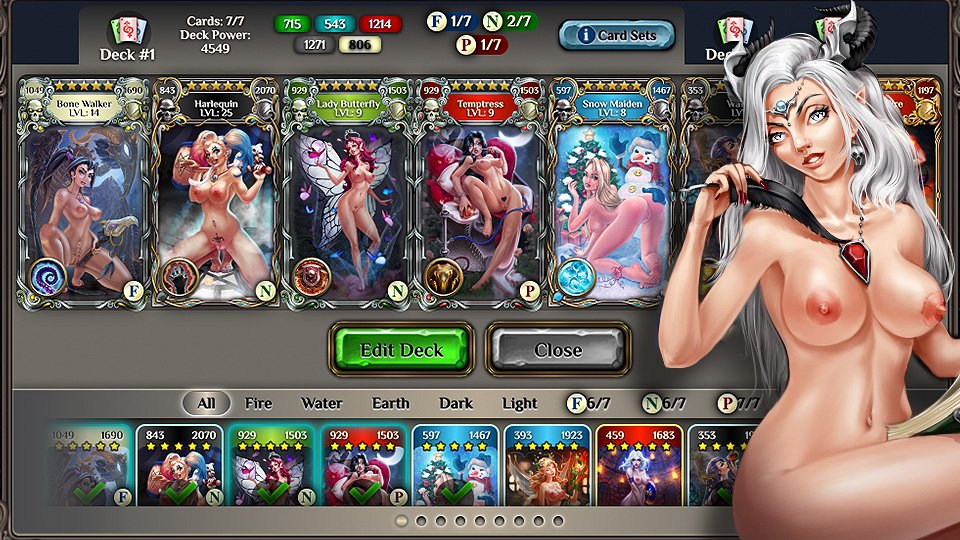
Battles are automatic — preparation decides the winner.
Five colors, five schools of play
Every card belongs to one of five colors: Blue, Red, Green, Dark and Light. The color of a card tells you its flavor and its role. Blue cards lean toward magic and control, Red cards hit hard, Green cards grow steadily, while Dark and Light cards bring the exotic and the holy ends of the roster. Early on, the game rewards you for focusing on a single color and leveling a tight core of cards, rather than owning a little of everything.
Rarities: from Common to Mythic
Cards are divided into five rarity tiers. Common cards such as Water Elemental, Thief, Alice and Mermaid form the backbone of any new collection. Rare cards like Pirate, Dark Angel and Snow Queen start showing up as you progress. Epic cards including Elemental Hunter, Vampire and Dryad bring meaningful abilities. Legendary cards such as Red Riding Hood, Valkyrie and Medusa are the prizes everyone hunts, and Mythic cards like Bone Walker, Temptress and Lady Butterfly sit at the top of the tree. Rarity mostly decides base power, but the effect on a card can matter just as much as its stats.
Leveling, gold and the economy
You level cards with gold earned from battles, and you spend rubies on premium upgrades. Chests come in Bronze, Silver and Gold boxes, plus Duel Chests earned from player-versus-player fights. Gold and Silver boxes are the dependable path to strong cards; Bronze boxes occasionally surprise you; Legendary cards drop rarely, so patience and tournaments are part of the plan. Each card also has a soulbind group and can carry a third item such as a Wisdom Book or a Precious Ring, which adds another layer of long-term investment.
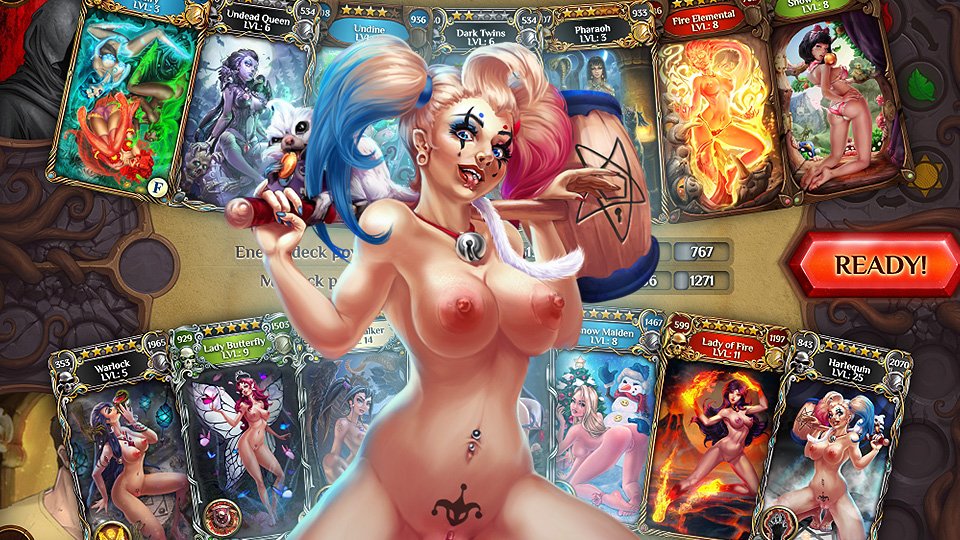
Your collection is the heart of the game.
Story chapters and live events
The campaign moves the story forward through visual novel scenes, while seasonal events keep the meta moving. Events like the Cursed Forest, Bloody Sabbath and Century Storm add limited cards and story chapters, and tournaments hand out exclusive prizes to the top three finishers. There is a clear ending to the main campaign once your collection is fully powered, so many players treat events and PvP as the long-term game.